






Article: Can Chickens Recover from Marek's Disease Paralysis? What the Science Actually Says

Can Chickens Recover from Marek's Disease Paralysis? What the Science Actually Says
- Marek's disease paralysis in chickens is not always permanent or fatal
- The Merck Veterinary Manual documents a recognized "transient paralysis" syndrome in which affected birds recover
- Recovered birds become long-term carriers — they shed virus for life but can live full, healthy lives
- Supportive care during the paralysis stage is the critical window
- Individual birds vary significantly in outcome depending on the form of disease and their immune response
What Is Marek's Disease?
Marek's disease is one of the most common viral diseases in backyard chickens worldwide. Caused by a highly contagious alphaherpesvirus (Gallid alphaherpesvirus 2), it spreads through feather follicle dander and dust, survives in poultry litter for months, and infects virtually every unvaccinated flock.
The disease is complex and presents in multiple forms:
- Neural form — progressive leg and wing paralysis from lymphocyte infiltration of peripheral nerves
- Visceral form — internal organ tumors (liver, heart, ovary, kidney)
- Ocular form — gray eye, irregular iris
- Cutaneous form — swollen feather follicles and skin lesions
- Transient paralysis syndrome — acute ataxia followed by recovery
That last form is the one most backyard flock owners never hear about — and it sits at the center of significant confusion online.
Source: Merck Veterinary Manual — Marek's Disease in Poultry, reviewed by David E. Swayne, DVM, PhD, DACVP, DACPV. Revised April 2024.
Can a Chicken Actually Recover from Marek's Paralysis?
Yes — and this is documented in peer-reviewed veterinary literature, not anecdote.
The Merck Veterinary Manual — the gold-standard clinical reference used by veterinarians globally — states explicitly:
"A transient paralysis syndrome has been associated with acute MDV infection; chickens become ataxic for periods of several days and then recover."
This is a recognized, named clinical syndrome. It is not wishful thinking. It is not misinformation. It is published science, reviewed and revised as recently as April 2024 by one of the world's leading avian pathologists.
The key distinction the science makes is between:
| Type | Cause | Prognosis |
|---|---|---|
| Transient paralysis | Acute MDV infection, immune response | Recovery possible |
| Progressive neural paralysis | Sciatic nerve tumor infiltration | Generally poor |
| Visceral/tumor form | Internal lymphomas | Poor to grave |
A bird that recovers from the transient form is not a miracle — it is a documented biological outcome.
Source: Merck Veterinary Manual
What Is Transient Paralysis?
Transient paralysis is one of several distinct clinical syndromes Marek's disease virus can trigger. It occurs during the acute phase of infection when the immune system mounts a response to the virus.
Affected birds become ataxic — they lose coordination and may appear completely paralyzed. This can look identical to the progressive form. The difference is the timeline: transient paralysis resolves over days to weeks as the bird's immune response brings the acute viral activity under control.
This is why the paralysis stage is the critical window. Birds that cannot reach food and water die — not from the virus directly, but from starvation and dehydration. Supportive care during this window gives the immune system the time it needs.
Source: Colorado State University Veterinary Diagnostic Laboratory — Marek's Disease
What Happens After Recovery — Are They Carriers?
Yes. Recovered birds are lifelong carriers and will shed the virus indefinitely. This is not a point of debate, and anyone caring for a Marek's survivor needs to understand it clearly.
The American Association of Avian Pathologists (AAAP) Avian Disease Manual states:
"Some recovered chickens and vaccinated chickens become carriers and will shed virus for long periods."
The Merck Veterinary Manual confirms:
"Infected chickens continue to be carriers for long periods and act as sources of infectious virus. Shedding of infectious virus can be decreased, but not prevented, by prior vaccination."
This is important biosecurity information, not a reason to deny a bird the chance to recover. It means:
- Keep recovered birds away from young, unvaccinated chicks
- Understand your environment is already contaminated if Marek's is present
- Vaccinate all new birds at hatch
- Practice good hygiene between flocks
A recovered carrier hen is not more dangerous than any other Marek's-exposed bird in your flock — because in a Marek's-positive environment, all birds are already exposed.
Source: AAAP Avian Disease Manual, 7th Edition
How Long Can a Recovered Marek's Bird Live?
This varies significantly by individual bird, viral strain, and immune response. The Colorado State University College of Veterinary Medicine states:
"Depending on the form and the manifestation, some birds may live longer with the disease than others."
At Crazy K Farm Sanctuary, we have personally cared for hens that recovered from full paralysis and went on to live years as healthy, productive members of the flock — laying eggs, socializing normally, and showing no signs of recurrence. These are not exceptional cases. They are the result of attentive supportive care during the acute phase and a strong immune response.
The birds that die from Marek's paralysis most often die because they cannot reach food and water — not because recovery was impossible.
What Does Supportive Care Look Like?
There is no antiviral treatment for Marek's disease. What supportive care does is keep the bird alive and comfortable while its immune system works. Key elements include:
- Isolation from the flock to prevent trampling and competition for food
- Food and water placed within reach — a paralyzed bird cannot walk to a feeder
- A clean, dry, padded area to prevent pressure sores and secondary infection
- Electrolytes and vitamins in the water to support immune function
- Sling or support positioning to keep airways clear and reduce muscle atrophy
- Daily assessment — watch for signs of progression vs. improvement
- Veterinary consultation — an avian vet can help differentiate Marek's transient paralysis from other causes and advise on comfort care
When Recovery Leads to a Different Kind of Life
Some flock owners who successfully nurse a Marek's hen through the paralysis stage find themselves at a practical crossroads: the bird has recovered, but returning her to the outdoor flock raises biosecurity concerns — particularly if younger or unvaccinated birds are present.
For these birds, many keepers choose to transition them to indoor life. A recovered Marek's hen can thrive indoors with the right setup. She is still a chicken — curious, social, and active — she simply lives in a different environment than she did before.
Practical considerations for an indoor chicken:
- A dedicated space with appropriate bedding, warmth, and natural light
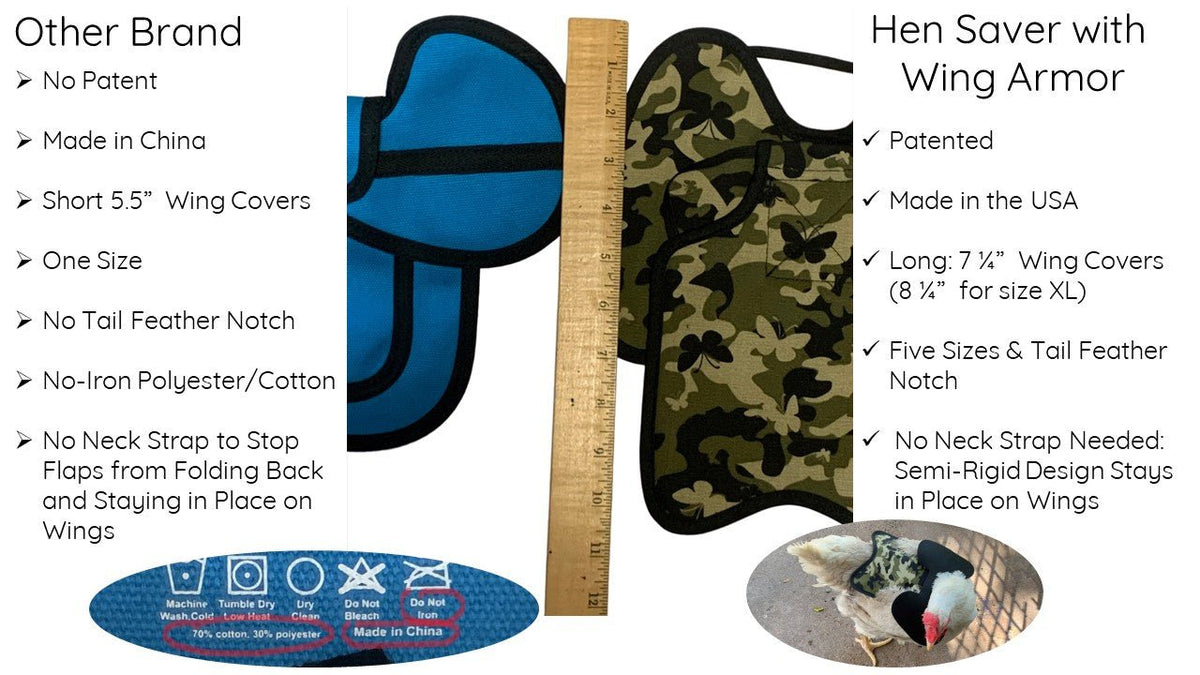
- A chicken diaper harness for supervised time with the family
- Enrichment — perches, foraging opportunities, companionship
- Continued observation for any recurrence of neurological symptoms
- An ongoing relationship with an avian-experienced veterinarian
It is not the right choice for every bird or every keeper, but for a hen that has fought her way back from paralysis, a quiet indoor life can be a genuinely good outcome.
Should You Euthanize a Paralyzed Chicken?
This is a personal and veterinary decision, and there is no universal answer. What veterinary science tells us is that euthanasia is not the only option for every paralyzed Marek's bird.
Factors worth considering:
- Is the paralysis progressing rapidly, or has it stabilized?
- Is the bird eating and drinking with assistance?
- Is the bird alert, responsive, and showing interest in its surroundings?
- Has a veterinarian confirmed the diagnosis and ruled out other causes?
- Do you have the capacity to provide intensive supportive care?
If the answers point toward a bird that is stable, responsive, and able to eat with help, the science supports giving the bird time. The transient paralysis form resolves. Not every bird. Not every time. But it happens, it is documented, and it is not misinformation to say so.
The Bottom Line
The claim that all Marek's paralysis is fatal and that any suggestion of recovery is misinformation is itself contradicted by published veterinary science.
The truth is more nuanced:
- Some Marek's paralysis is transient and recoverable — documented by Merck Veterinary Manual
- Recovered birds become long-term carriers — also documented
- Individual outcomes vary significantly — confirmed by Colorado State University Vet Lab
- Supportive care during the paralysis stage is critical — not a cure, but it gives the immune system time
As sanctuary operators, our job is to give every animal the chance their biology allows. For Marek's birds, that means understanding the science well enough to know when to try — and when to let go.
Tobi Kosanke is the founder of Crazy K Farm Pet and Poultry Products and Crazy K Poultry and Livestock, a 501(c)(3) non-profit animal sanctuary in Hempstead, Texas, caring for 200+ rescued animals, mostly chickens. She is a PhD scientist and has been caring for backyard poultry since 2006.
Have questions about your flock's health? Always consult a licensed avian veterinarian for diagnosis and treatment decisions.